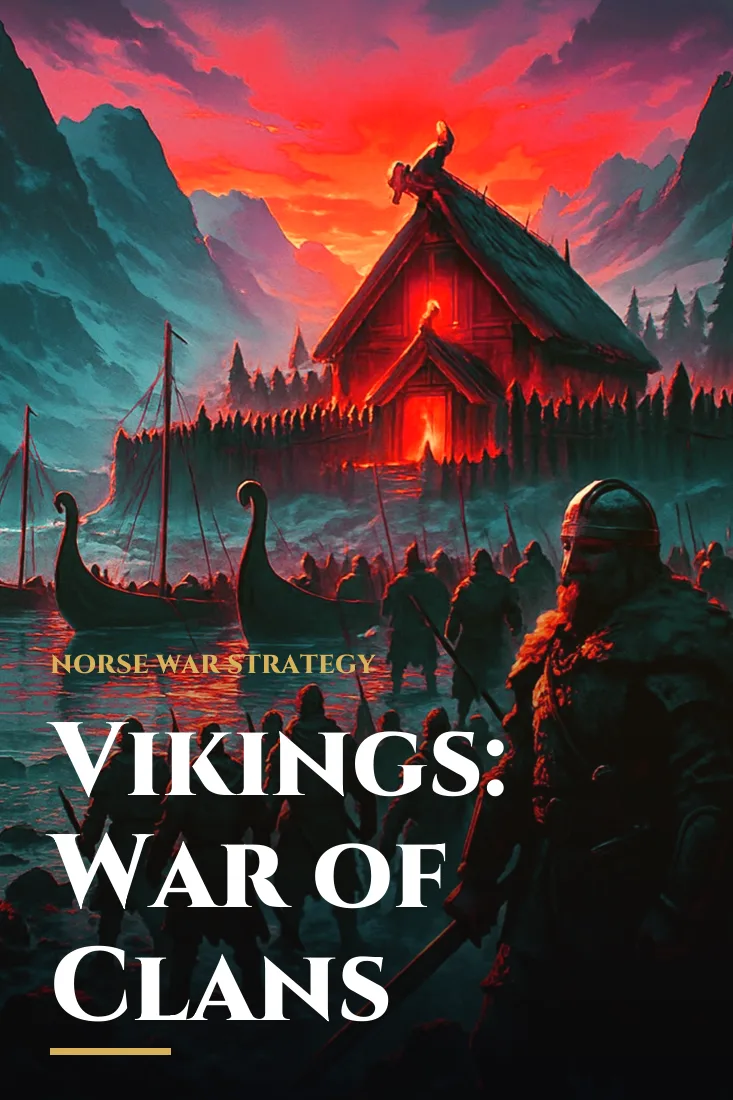
Vikings: War of Clans has been running since 2015 on phones and arrived in browsers in 2017, according to its history. It shows its maturity in the right places. The town builds smoothly, the map is busy, and the clan tools are some of the best organized we used. It is a game designed around the idea that one Viking needs a hundred allies, and it keeps nudging you towards them.
We played a month on the browser version, with the mobile app on the side for quick check-ins. The town and troop systems kept us busy for the first week. After that, the clan carried the experience: shared goals, help requests, coordinated raids and the slow push towards the Place of Power at the centre of our kingdom.
A town of timber, iron and patience
Your home is a Norse town that grows building by building. Resources include lumber, iron, food, stone and silver, gathered from your own buildings, from resource locations on the map and from other players’ towns if you are bold. The core loop is classic: upgrade producers, unlock better troops, research new knowledge, repeat.
What stands out is how readable it all is. Timers are clear, and the browser version handles the busy screens well. The Knowledge tree is where long-term planning lives; the game’s own pitch says knowledge can be as sharp as a sword, and the research choices you make there shape your army for weeks.
Your Jarl and the heroes who ride out
You play as a Jarl, a leader whose name you are trying to make known across the world. Heroes lead your raids, and your troops climb through tiers as your stronghold grows. The skill choices you make for your Jarl push you towards a role: a raider who lives on the map, a builder who grows quickly, or a defender who makes attackers regret the trip.
That specialization matters most inside a clan. A clan wants farmers, raiders and walls, and the Jarl tree lets you become one of those on purpose. We built towards defence and became the clan’s most reliable reinforcement point, which turned a modest account into a respected one. Few games make a mid-sized player feel this useful.
Clans of a hundred and a seat at the centre
Clans can hold around a hundred members or more depending on their strength, with ranks from chief down that define who can do what. The good ones feel like a guild in an older MMO: a chat that never sleeps, someone online at every hour, and a schedule for clan events. Small favours between members, from reinforcements to resources, add up quickly.
Each kingdom has a Place of Power at its centre, and holding it brings kingdom-wide bonuses and a lot of attention. The struggle for it is the long-term story of any kingdom, and even players far from the front feel it through alliances, rivalries and the occasional sudden war. It gives a casual daily routine a sense of something larger happening.
Generous to busy people, strict to loners
Vikings scores highest of all six for respecting your evenings. Short visits are genuinely enough to keep a town growing, and the mobile app means a check-in at lunch or on the bus is easy. Clan reinforcements and a well-built defence give you ways to protect yourself when you will be away, which matters a great deal in a PvP-first game.
The catch is footing without spending. The growth curve gets steep in later stronghold levels, and players who invest more clearly pull ahead in raw power. A good clan offsets a lot of that, which is why our clan life score is so high and our free footing score is the lowest among the top four. Pick your clan carefully and the gap matters far less.
Seven frosty mornings in Vikings: War of Clans
- Spend the first days upgrading producers and the stronghold so your build queue never sits idle.
- Join an active clan early and introduce yourself in clan chat before you need anything.
- Choose a Jarl skill direction by day three: raider, builder or defender, then stick with it.
- Gather from nearby resource tiles instead of raiding until you understand who is strong around you.
- Learn how your clan handles reinforcements before you log off for a long stretch.
What wore us down
- Later stronghold levels slow down sharply for players who never spend.
- Without an active clan the game feels thin after the first week.
- Big clans can dominate a kingdom for long stretches, discouraging newcomers.
Why we kept logging in
- The clan tools are organized, lively and easy to use from day one.
- Short check-ins are enough to keep a town growing steadily.
- The Place of Power gives every kingdom a long-running central story.
- Jarl skills let a mid-sized player become genuinely useful to a clan.
The commander Vikings: War of Clans was made for
Vikings: War of Clans suits players who like belonging to something: a clan with a schedule, shared goals and a chat full of familiar names. It works brilliantly around a busy life, with short daily visits and a phone app for the gaps. Lone wolves should look elsewhere.
Where Vikings: War of Clans lands after a month of play
Vikings is the best clan experience on our list and the friendliest to a packed calendar. The town and Jarl systems are polished, the Place of Power gives each kingdom a heart, and good clans turn the game into a warm daily habit. Free players feel the curve steepen later, which keeps it out of the top two, but with the right longhouse around you it is hard to put down.